Female Composers: Recommended Reading & Resources

Read my other articles in this series: Why Learn About Female Composers? and Changing the Narrative: Awareness & Advocacy of Female Composers.

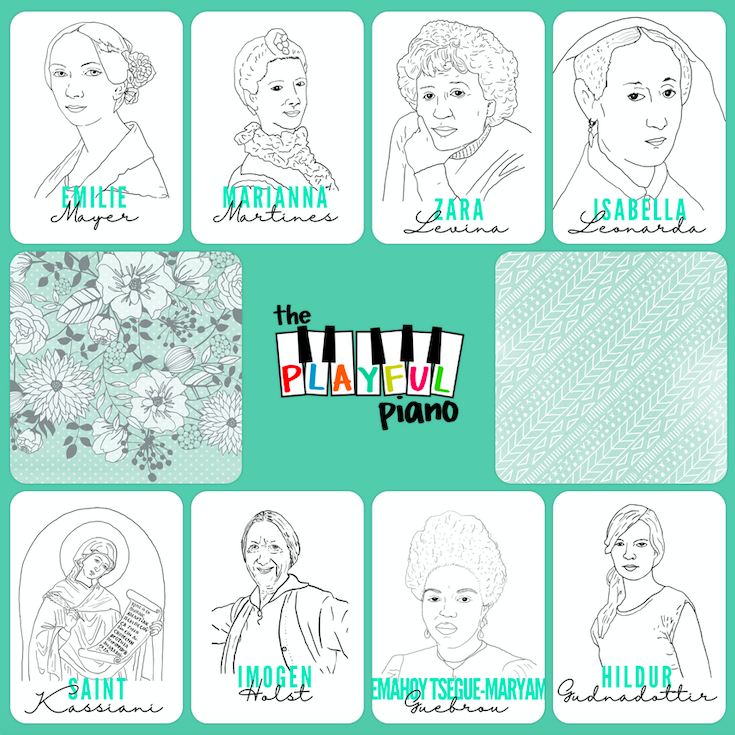
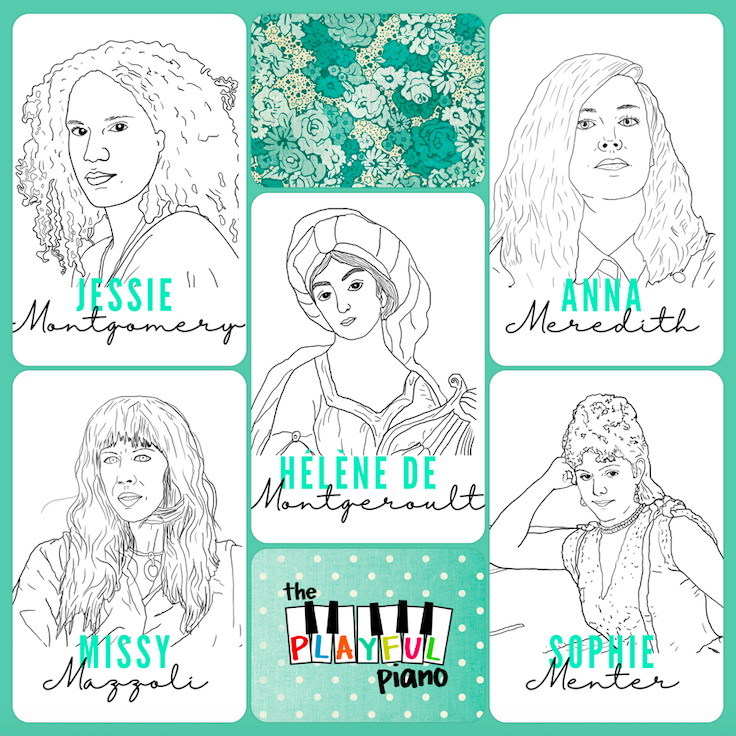
We have just concluded a month-long Female Composers Challenge to celebrate Women’s History Month. We learned about 31 female composers throughout history and listened to some of their music. We also took on the challenge of sight-reading one piece by a female composer each day of the month.

My hope for all who participated in this challenge, as well as for other music & piano teachers, is that you will continue to discover more female composers. I have discovered that once you start to learn about them it ignites a passion inside you on the subject! I am constantly discovering new female composers and putting their music in a playlist so that I can keep on listening and learning about talented composers.

Here is a recommended reading list of great resources that I have used to learn about female composers. I also think that one of the best things you can do is to simply start listening, and start playing. Just go to YouTube or your favorite music streaming app and type in the name of a female composer and start listening to their music. Hop onto imslp.org and download some music by women and start playing.

Recommended Reading & Other Female Composers Resources

Books About Female Composers

The Norton/Grove Dictionary of Women Composers

Sounds and Sweet Airs by Anna Beer

Women Composers: The Lost Tradition Found by Diane Peacock Jezic

From Spirituals to Symphonies: African-American Women Composers and Their Music by Helen Walker-Hill

Unsung: A History of Women in American Music by Christine Ammer

Stories of Women Composers for Young Musicians by Catherine Wolff Kendall

Shades of Sound: Women Composers – A Listening & Coloring Book for Pianists by Jennifer Boster (studio-licensed PDF)

Shades of Sound: Women Composers – A Listening & Coloring Book for Pianists by Jennifer Boster (paperback edition)

Other Resources

Women Composers Database by the Kapralova Society

Recommended Sheet Music by Female Composers

At the Piano with Women Composers, edited by Maurice Hinson

The Life and Music of Amy Beach: The First Woman Composer of America by Gail Smith

Fanny Mendelssohn Hensel Piano Music

Sonata in E Minor by Florence Price

Alma Deutscher: From My Book of Melodies

Piano Sonatas and Etudes by Hélène de Montgeroult on imslp.org (click on “Books” tab for Etudes)

Music by Fanny Mendelssohn Hensel on imslp.org (I recommend Piano Sonata in G minor and Das Jahr)

Central Star by Paula Dreyer

Piano Pieces by Judith Lang Zaimont on Sheet Music Plus

Piano Music of Zara Levina on Piano Rare Scores

Piano Sonata & Waltz by Dora Pejačević on Piano Rare Scores

Piano Works by Sophie Menter on Piano Rare Scores

30 Etudes by Louise Farrenc on imslp.org

3 Morceaux by Lili Boulanger on imslp.org

Reverie op. 2 no. 1 by Paula Szalit

4 Sketches by Amy Beach (I really recommend “Dreaming” and “Fireflies”)

Music by June Armstrong (I recommend “Safari,” “Six Little Preludes & Fugues” and “Enchanted World”)

Troubled Water by Margaret Bonds

Romancing in Style by Eugénie Rocherolle

Piano Music by Liz Story

4 Preludes by Maria Szymanowska

Keyboard Concerto by Maria Hester Park

Winter Illuminations by Wynn-Anne Rossi

Changing the Narrative: Awareness & Advocacy of Female Composers

Changing the Narrative

I recently wrote about why it is so important to learn about female composers. When I first started learning about female composers and listening to their music, I couldn’t believe how many there were and that I had never heard of them before!

The more I learn about women composers, the more passionate I feel about changing the narrative of music history that we are all taught. Amazingly there are still so many discrepancies between music by men and women even today. Pick up a book about music history, and chances are there are hardly any women mentioned within its pages. Visit your local music store and search for advanced piano literature by women – good luck finding more than one or two books. A lot of really great piano repertoire by women isn’t even available to purchase in a nicely-printed format, you can often only find hard-to-read, scanned-in manuscript scores on the internet. Attend your local symphony; you will be hard-pressed to hear more than a very, very small percentage of works by women performed on that stage. If you have followed along with the Female Composers Challenge all month, you have barely dipped your toes in to the available music by women throughout history, yet you probably have come away with a realization of just how much music by women is out there.

Awareness & Advocacy

Growing up being trained as classical musicians, most of us completed our music training blissfully unaware that there WERE women who composed, or that any works by women were important or beautiful or worthy of our study as pianists. Of course none of this is true, and the first step to changing that narrative is simply becoming aware of the discrepancy. Becoming aware of who the great female composers were/are and what their music is like is such an important step. I believe this awareness is crucial, particularly for music teachers, for I believe that it is us who will be able to help turn the tide and change the music history narrative. As soon as I realized that I didn’t know of many women composers, I started searching them out on the internet. I started pulling up their music on Apple Music or YouTube and listening. I started searching for scores to try and play their music. And I started looking for more information about these composers. I think that awareness will turn into searching and discovering, which will turn into advocacy for these amazing composers. I have loved seeing so many posts on social media all about female composers this past month as we celebrated Women’s History Month. What a great way to spread the word and advocate for these forgotten women.

Application & Student Education

As we start to advocate for music written by women, it is so important to also utilize it in our teaching. Find pieces by women that teach important techniques and use them instead of other traditionally-used pieces written by men. Offer repertoire written by women along with repertoire written by men. Teach your students about female composers along with the famous male composers. Offer listening assignments that will introduce students to both male and female composers and allow them to discover favorite composers of both genders.

I also urge you to ask your local music store, next time you are there, what music they have by female composers. Do they have any piano music by Fanny Mendelssohn Hensel, Amy Beach or Clara Schumann? My store only had one Amy Beach book. I wonder what would happen if music teachers all over started to ask their music stores to carry more music by women?

Why Learn About Female Composers?

We have just concluded our Female Composers Challenge in honor of Women’s History Month. It has been a fantastic experience learning about and listening to the music of 31 female composers. These composers come from many countries and many centuries throughout history. Each day of the challenge we learned about a composer, listened to one of her pieces and also sight-read one piece of music by any female composer.

As we wrap up this challenge I wanted to share some thoughts.

I believe that female composers are a vital part of music history, despite the fact that they have for the most part been omitted from the history books. I also believe that it is important to hear works composed by many types of people. When we limit our music history education to dead white males, we are missing out on the life work of so many who have a lot to say. I love the famous works by Beethoven, Bach, Chopin, Debussy and so many others who we have grown up learning about. But add in Smyth, Mayer, Beach, Schumann, Hensel and Price and your understanding of music history is enriched and enlarged. These women were incredible. They had so much working against them, and yet they contributed so much amazing music.

So, why should we learn about female composers? Well, because they were there. They lived and worked and composed at the same time and often in the same circles as men.

Many of these composers even taught those famous men that we all know. Carreño was one of Edward MacDowell’s first piano teachers. Nadia Boulanger taught many extremely famous and successful composers, including Aaron Copland, Philip Glass and Leonard Bernstein.

Many female composers were very successful students of famous male composers. Liszt taught Menter and Backer-Grøndahl. Clementi taught Montgeroult. Tailleferre was taught by Debussy, Ravel and Satie. Haydn taught Marianna von Martines, and Faure taught the Boulanger sisters.

Other female composers were friends and associates with famous male composers. Chaminade knew Bizet and Berlioz, who convinced her parents to get her the best music education possible. Clara Schumann of course was in the same circle as her famous husband Robert and was very close with Brahms as well. Zara Levina worked with Kabalevsky in children’s music education in the USSR. Ethel Smyth was acquainted with Brahms, Grieg, Dvorak and Tchaikovsky, and Agathe Backer-Grøndahl knew Grieg. Maria Hester Park was friends with Haydn, and they used to correspond through letters and send each other their works. Marie Bigot was friends with Haydn and Beethoven, who gave her the manuscript of his Appassionata Sonata. We could go on and on. But these female composers, who were in many cases very well-known in their lifetime, lived and worked and were well-acquainted with their male contemporaries.

We need to know these women because they made important contributions. They were trailblazers in their day, breaking out of genres traditionally reserved for women and writing beautiful and important works. Many of them, such as Hélène de Montgeroult, Louise Farrenc, Zara Levina and Nadia Boulanger made big contributions to piano pedagogy and music education. Many of them paved the way for other female composers.

It is important to know these women and to share them with our students, because all young musicians need role models. Of course girls can compose – but if they are not taught about any composers who look like them, it will be harder for them to realize that they can do it. I loved learning about these women and finding similarities in their lives with my life. I felt inspired when I learned about Florence Price supporting her daughters as a piano teacher and musician; I loved that Alice Mary Smith wrote some of her best work after becoming a mother. As we learn about these women and find something to relate to, their work helps to inspire us and our students.

Continue reading: Changing the Narrative

Verified by ExactMetrics